
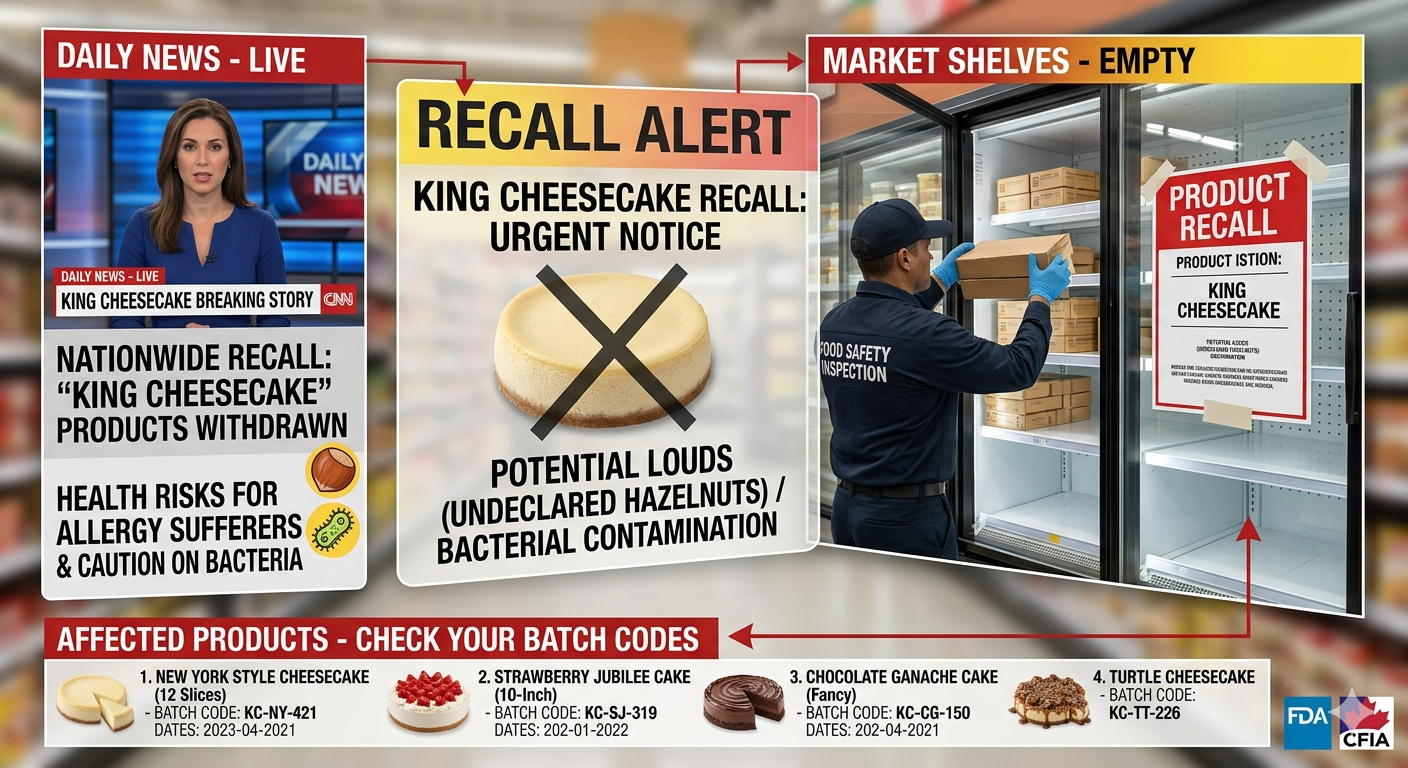
What Happened With the King Cheesecake Recall
King Cheesecake Company, Inc., a Texas-based dessert manufacturer, issued a voluntary recall for six cake and cheesecake products on July 18, 2025, after determining that pecans used in the products may have been contaminated with Salmonella. The FDA subsequently escalated the situation by issuing a Class I risk classification for the recall on August 7, 2025, the agency’s highest and most serious risk warning level.
According to the FDA, a Class I classification represents a situation where there is a reasonable probability that exposure to the affected product could cause serious adverse health consequences or death. This is the most severe category the FDA assigns to any food recall, reserved specifically for situations carrying genuine risk of serious harm rather than minor or low-risk issues.
The contamination concern traced back to the supplier of pecans used across multiple King Cheesecake product lines. Once the company identified the potential risk through internal testing, it moved to pull the affected batches from circulation and notify the appropriate regulatory authorities.
Which Products Were Recalled
The recall covers six specific items, identified by their product names and item numbers:
Italian Layer Cake, item number 1071. Carrot Layer Cake, item number 1312. Tres Leches Cheesecake, item number 99272. Hummingbird Layer Cake, item number 3145. Chocolate Tres Leches Cheesecake, item number 99273. Assorted Layer Cake, item number 2485.
All of the affected products were manufactured between June 20 and July 14, 2025. If you have a King Cheesecake product at home, checking the product name and item number against this list, along with the manufacturing date if visible on the packaging, is the most reliable way to determine whether it falls within the recall.
Where the Recalled Products Were Distributed
The recalled products were distributed across six states: Alabama, Texas, Florida, Louisiana, Oklahoma, and Illinois. If you purchased a King Cheesecake product in any of these states during the relevant timeframe, it’s worth checking your packaging against the recalled item list, even if you’re not entirely certain of the exact purchase date.
Why Salmonella Contamination Is Taken So Seriously
Salmonella bacteria cause a gastrointestinal illness known as salmonellosis. Symptoms typically develop between 12 and 72 hours after exposure and generally last between four and seven days, commonly including fever, diarrhea, and abdominal cramps.
While most healthy adults recover from Salmonella infection without long-term complications, the situation can become considerably more serious for certain groups. According to the FDA, children younger than five, elderly individuals, and people with weakened immune systems are more likely to experience severe salmonellosis. The CDC notes that in some people, the illness may be severe enough to require hospitalization, and in certain cases, the infection can spread from the intestines into the bloodstream and then to other parts of the body.
Salmonella infections can become fatal in rare cases, with the FDA estimating that approximately 450 deaths occur annually in the United States from salmonellosis. This combination of relatively common, usually mild symptoms alongside a real risk of severe illness in vulnerable populations is part of why the FDA assigns its highest classification to recalls involving credible Salmonella contamination risk.
What to Do If You Have a Recalled Product
If you have any of the six affected King Cheesecake products at home, the most important step is simple: do not eat it. Consumers who purchased the affected items can typically return them to the store where they were purchased to receive a full refund, though it’s worth confirming the specific return process with the retailer directly, since procedures can vary by store.
If you’re unsure whether a product you purchased matches the recalled items, compare the product name and item number directly against the official list, and check the manufacturing date range if it’s visible on your packaging. When in doubt about whether a specific product is affected, contacting the retailer or checking the FDA’s recall database directly is the most reliable way to confirm.
What to Do If You’ve Already Eaten a Recalled Product
If you’ve already consumed one of the recalled King Cheesecake products, monitor yourself for symptoms of salmonellosis over the following several days, since symptoms typically appear within 12 to 72 hours of exposure. Common symptoms include diarrhea, fever, and stomach cramps.
Most people recover without specific medical treatment, but if symptoms are severe, persistent, or you fall into a higher-risk group, such as being pregnant, elderly, very young, or immunocompromised, contacting a healthcare provider is the safer course of action. Symptoms like high fever, signs of dehydration, bloody diarrhea, or symptoms lasting longer than expected warrant prompt medical attention rather than waiting it out at home.
Recall Status as of This Writing
According to FDA enforcement records and reporting from Newsweek, this recall remains listed as ongoing. The initial voluntary recall was issued on July 18, 2025, with the FDA’s Class I classification confirmed on August 7, 2025. As is common with FDA enforcement reports, the situation was documented through the agency’s regular enforcement reporting process rather than through a separate, dedicated press release at the time the Class I classification was confirmed.
Given that recall situations can be updated as new information becomes available, checking the FDA’s official recall database directly for the most current status is recommended if you’re trying to confirm the latest details rather than relying solely on any single news report, including this one.
How to Stay Informed About Future Food Recalls
This recall is a useful reminder of how a single contaminated ingredient, in this case a batch of pecans from a supplier, can affect an entire product line across multiple states before the issue is caught and addressed. Staying informed about food recalls more broadly, not just this specific incident, is one of the most practical ways consumers can protect themselves and their families.
The FDA maintains a public recall database that can be searched directly for the most current information on any active food recall. Signing up for recall notifications from the FDA, checking product packaging carefully against recall notices when news of a recall breaks, and registering products with manufacturers when possible are all practical habits that can help you respond quickly if a product you’ve purchased is later found to carry a safety risk.
FAQs About the King Cheesecake Recall
Q1: What products were included in the King Cheesecake recall?
The recall covers six items: Italian Layer Cake (item 1071), Carrot Layer Cake (item 1312), Tres Leches Cheesecake (item 99272), Hummingbird Layer Cake (item 3145), Chocolate Tres Leches Cheesecake (item 99273), and Assorted Layer Cake (item 2485), all manufactured between June 20 and July 14, 2025.
Q2: Why was King Cheesecake recalled?
The recall was triggered after King Cheesecake Company determined that pecans used in the affected products may have been contaminated with Salmonella, based on information from the ingredient supplier and the company’s own internal testing.
Q3: What does an FDA Class I recall mean?
A Class I classification is the FDA’s highest and most serious risk category, indicating a reasonable probability that exposure to the product could cause serious adverse health consequences or death. It’s reserved for situations the FDA considers to carry genuine, significant health risk.
Q4: Which states received the recalled King Cheesecake products?
The affected products were distributed to Alabama, Texas, Florida, Louisiana, Oklahoma, and Illinois.
Q5: What should I do if I have a recalled King Cheesecake product?
Do not eat it. You can typically return the affected product to the store where you purchased it for a full refund, though confirming the exact return process with the specific retailer is recommended since procedures can vary.
Q6: What are the symptoms of Salmonella infection?
Symptoms typically appear 12 to 72 hours after exposure and commonly include diarrhea, fever, and stomach cramps, usually lasting between four and seven days. Most people recover without specific treatment, though severe cases can require hospitalization, particularly in young children, elderly individuals, and people with weakened immune systems.
Q7: Is the King Cheesecake recall still active?
According to FDA enforcement records as reported by Newsweek, the recall was listed as ongoing as of early August 2025. For the most current status, checking the FDA’s official recall database directly is recommended, since recall statuses can be updated over time.
Q8: Who is most at risk from Salmonella contamination?
According to the FDA, children younger than five, elderly individuals, and people with weakened immune systems face a higher likelihood of severe salmonellosis. These groups should be especially cautious about avoiding recalled products and should seek medical attention promptly if symptoms develop after potential exposure.
More From Our Blog
If you found this article helpful, you might also enjoy exploring more content from our blog. We regularly publish guides, tips, and insights across a variety of topics to help you stay informed and make better decisions. Feel free to check out our other articles and let us know what you’d like us to write about next.