
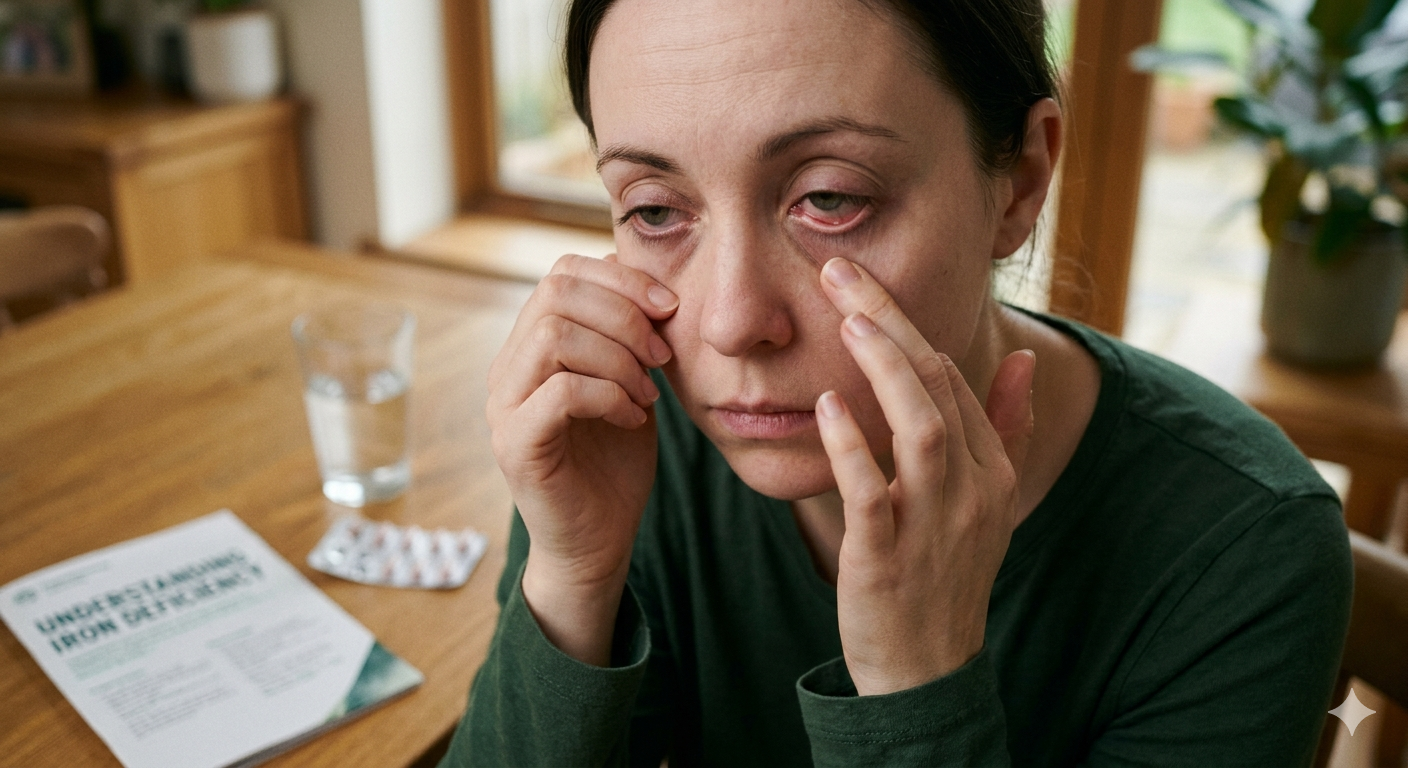
Why Eyelids Can Reveal Low Iron Levels
Eyelids are one of the more revealing places on the body when it comes to spotting iron deficiency, and there’s a clear anatomical reason why. Eyelids are very sensitive to iron levels because they have a lot of blood flow and thin skin, which means they can show signs of iron deficiency before other parts of the body do.
Iron is a critical component of hemoglobin, the protein in red blood cells responsible for transporting oxygen throughout the body. When iron stores run low, the body cannot produce enough functional hemoglobin, leading to a condition called iron deficiency anemia. Because hemoglobin is what gives blood its red color, lower levels make blood less red overall, which directly affects how pink or red different tissues appear, including the thin, blood-vessel-rich skin of the eyelids.
What Pale Eyelids Actually Look Like
The most reliable and most frequently cited eye-related sign of low iron is pale inner eyelids, also known as conjunctival pallor. In a healthy person, the inside of the lower eyelid appears vibrant pink or red due to a rich network of visible blood vessels. With iron deficiency, that same area can appear pale, washed out, or even close to white or yellowish, because there isn’t enough oxygenated hemoglobin to give the tissue its normal color.
A 2023 review of research specifically notes that pallor in the creases of the palms or inside the eyelids is considered a reliable indicator of anemia, making it one of the more clinically meaningful signs to watch for compared to vaguer symptoms like general tiredness.
How to Check Your Eyelids for Signs of Low Iron
Checking your inner eyelids at home is simple and doesn’t require any special equipment. Stand in front of a mirror with good lighting, gently pull down your lower eyelid, and look at the inner surface, known as the conjunctiva. A healthy conjunctiva should appear a vibrant pink or red color throughout. If instead it looks pale, very light pink, whitish, or yellowish, this can be a sign of low iron levels worth paying attention to.
It’s worth noting that in people with darker skin tones, the eyelid may be the only area where pallor is clearly noticeable, since changes in overall skin tone can be harder to detect visually compared to lighter skin. This makes the eyelid check a particularly useful tool across different skin tones.
While this kind of visual check can be a helpful first clue, it isn’t a substitute for an actual diagnosis. If you notice pale inner eyelids alongside other symptoms, healthcare providers typically follow up with a complete blood count, commonly known as a CBC, which provides detailed information about red blood cell production and size to confirm whether anemia is actually present.
Other Eye-Related Signs of Low Iron
Pale eyelids rarely show up in complete isolation. Several other eye-related changes commonly accompany low iron levels and can help build a clearer picture when considered together.
Dark circles under the eyes are a frequently reported sign, often linked to the poor circulation that comes with reduced oxygen delivery to surrounding tissues. Some people also notice a bluish tint to the whites of the eyes, known as the sclera, which can occur alongside the more classic pale conjunctiva.
Eyes may also look generally dull, heavy, or shadowed, with some people reporting increased puffiness around the eye area. Iron deficiency can additionally reduce tear film stability, which may contribute to dryness, a gritty or scratchy sensation, and general eye irritation that some people initially mistake for ordinary dry eye syndrome rather than connecting it to their iron levels.
Eye twitching, medically known as blepharospasm, has also been associated with iron deficiency in some cases, potentially linked to muscle fatigue and the broader physical stress that low iron places on the body. In more severe or prolonged cases of anemia, blurred vision and increased eye strain have been reported as well, generally reflecting more advanced stages of iron deficiency rather than early-stage symptoms.
How Low Iron Affects the Eyes Beyond the Eyelids
Because the eyes rely heavily on a steady oxygen supply, more significant or prolonged iron deficiency can potentially affect deeper structures beyond just the visible eyelid tissue. The retina specifically depends on consistent oxygenation, and in some documented cases, anemia has been associated with changes in retinal blood vessels or other retinal changes detectable during a professional eye exam.
This doesn’t mean everyone with mild iron deficiency will experience these deeper effects. These more significant changes are generally associated with more severe or longer-standing anemia rather than mild, early-stage iron deficiency, and they underscore why addressing low iron levels appropriately, rather than ignoring early signs like eyelid pallor, matters for overall eye health over time.
Distinguishing Low Iron From Other Eye Issues
It’s worth knowing how to mentally separate low iron-related eye changes from other common eye conditions, since several symptoms can overlap on the surface. Allergy-related eye irritation tends to present as red, visibly irritated, or “angry”-looking eyes, while iron deficiency-related changes tend to look the opposite: pale, washed out, or “bloodless” rather than inflamed.
Similarly, ordinary dry eye syndrome and iron deficiency-related dryness can feel similar day to day, but the distinction often comes down to accompanying signs. Dry eye on its own typically isn’t paired with pale inner eyelids, dark circles, or the broader fatigue commonly associated with anemia, whereas iron deficiency-related eye symptoms tend to show up as part of a wider pattern rather than in isolation.
Other Signs of Iron Deficiency Beyond the Eyes
Eyelid pallor is rarely the only sign of low iron, and recognizing accompanying symptoms elsewhere in the body can help confirm whether what you’re noticing in the mirror is actually connected to iron levels.
General fatigue and feeling unusually out of breath during normal activity or exercise are commonly reported, particularly among athletes, who face a higher risk of iron deficiency overall. Pale skin, particularly noticeable on the face and lips alongside the inner eyelids, is another commonly cited sign, since reduced hemoglobin affects skin tone in a similar way to how it affects the eyelid tissue.
Iron deficiency can also cause poor circulation, leading to chronically cold hands and feet, since extremities are furthest from the heart and more affected when oxygen delivery is reduced. Brittle nails that become thin, prone to cracking, or even develop a concave, spoon-like shape are another frequently mentioned sign, alongside unusual cravings for non-food substances, a condition known as pica, which is a recognized though less commonly discussed symptom of iron deficiency.
What to Do If You Notice These Signs
If you notice pale inner eyelids along with other potential signs of low iron, such as fatigue, pale skin, or cold extremities, the most reliable next step is speaking with a healthcare provider rather than self-diagnosing or self-treating based on appearance alone. A simple blood test, specifically a complete blood count, can confirm whether anemia is present and help identify how significant the deficiency actually is.
Treatment for iron deficiency typically starts with addressing the underlying cause, which may involve dietary changes to increase iron-rich foods, iron supplementation if levels are significantly low, or investigating an underlying condition if the deficiency is linked to something like chronic blood loss rather than diet alone. For more advanced cases involving documented changes to vision or the retina specifically, your doctor may also recommend additional eye-specific evaluation or treatment alongside addressing the anemia itself.
It’s worth noting that some people experience no noticeable symptoms of iron deficiency anemia at all, particularly in earlier stages, which is part of why routine blood work remains valuable even in the absence of obvious visible signs like eyelid pallor.
FAQs About Eyelids and Low Iron
Q1: What do pale eyelids from low iron actually look like?
The inner surface of a healthy lower eyelid should appear vibrant pink or red. With low iron, that same area can look pale, very light pink, whitish, or even slightly yellowish, due to reduced hemoglobin and oxygenated blood in the tissue.
Q2: How do I check my own eyelids for signs of low iron?
Gently pull down your lower eyelid in good lighting and observe the inner surface, known as the conjunctiva. A pale or washed-out appearance compared to a normal vibrant pink or red color can be a sign worth discussing with a doctor, especially alongside other symptoms.
Q3: Is checking my eyelids enough to diagnose iron deficiency?
No. While pale inner eyelids are considered a reliable visual indicator, an actual diagnosis requires a blood test, typically a complete blood count, to confirm anemia and assess its severity.
Q4: Can low iron cause dark circles under the eyes?
Yes, dark circles are a commonly reported sign associated with low iron, often linked to the poor circulation that results from reduced oxygen delivery to the tissue surrounding the eyes.
Q5: Can iron deficiency cause eye twitching?
Some sources associate eye twitching, known medically as blepharospasm, with iron deficiency, potentially related to muscle fatigue and the broader physical stress low iron places on the body, though this is considered a less commonly discussed symptom compared to pale eyelids.
Q6: How can I tell if my eye symptoms are from low iron versus allergies?
Allergy-related eye issues typically present as red, irritated, or inflamed-looking eyes, while low iron-related changes tend to look the opposite: pale and washed out rather than red or angry-looking. Considering accompanying symptoms, such as fatigue or pale skin, can also help distinguish between the two.
Q7: Can iron deficiency affect deeper parts of the eye, not just the eyelids?
In more severe or longstanding cases, anemia has been associated with changes in the retina, including effects on retinal blood vessels, since the retina depends heavily on consistent oxygen supply. These deeper effects are generally linked to more advanced anemia rather than mild, early-stage iron deficiency.
Q8: What should I do if I notice pale eyelids along with other symptoms of low iron?
Speak with a healthcare provider, who can order a complete blood count to confirm whether anemia is present. Depending on the cause and severity, treatment may involve dietary changes, iron supplementation, or further investigation into an underlying cause of the deficiency.
More From Our Blog
If you found this article helpful, you might also enjoy exploring more content from our blog. We regularly publish guides, tips, and insights across a variety of topics to help you stay informed and make better decisions. Feel free to check out our other articles and let us know what you’d like us to write about next.