
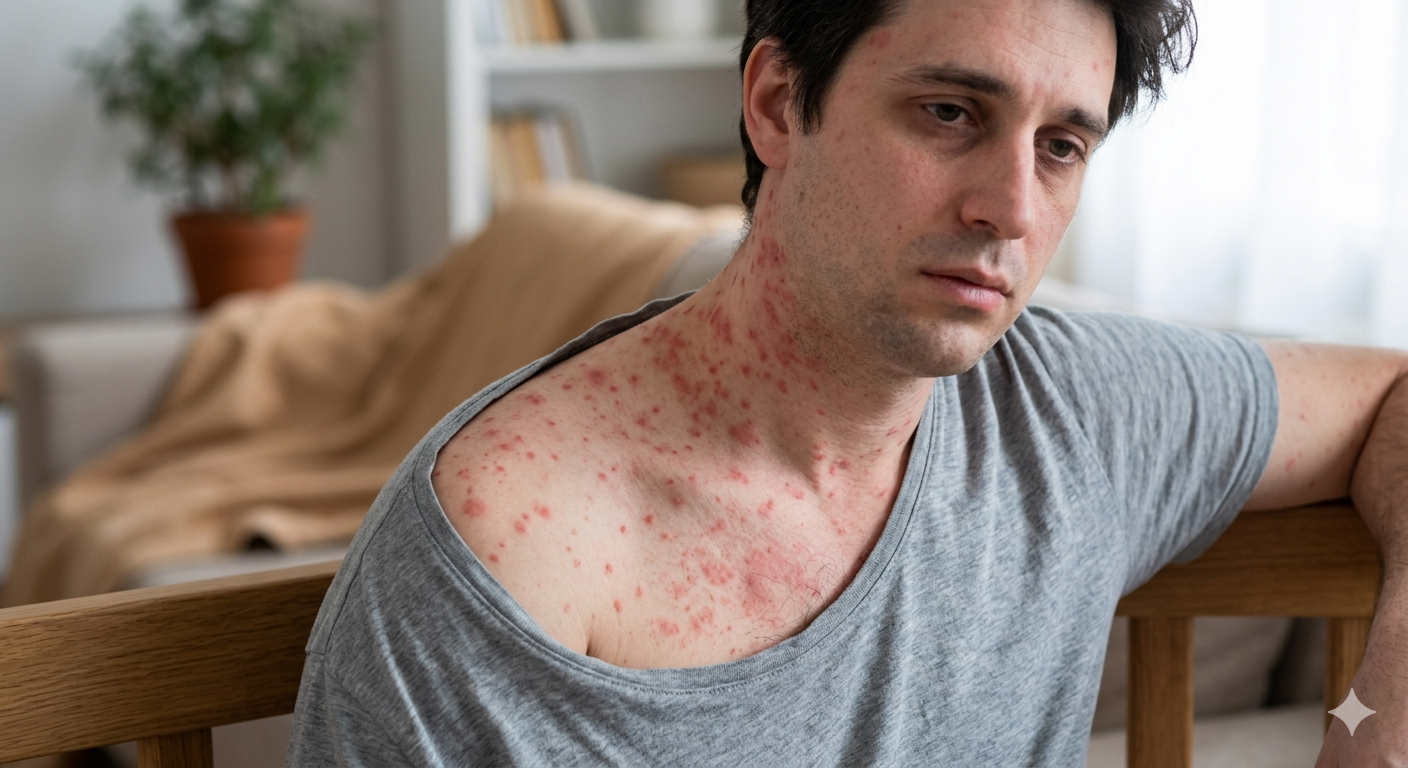
Can RSV Cause a Rash?
Yes, RSV (respiratory syncytial virus) can cause a rash, though it’s less common than the typical respiratory symptoms most people associate with the infection. Doctors often refer to this kind of rash as a “viral rash” or “viral exanthem,” a term used for skin reactions that show up during many different viral infections, not just RSV specifically.
The rash isn’t caused directly by the virus attacking the skin. Instead, it develops as part of the immune system’s broader response to fighting off the infection. As the body works to clear RSV, it releases inflammatory substances that can trigger skin irritation as a kind of side effect of that immune activity.
RSV itself is extremely common and highly contagious. By the age of two, most children have already had at least one RSV infection, and reinfection can happen at any age throughout life.
What Does an RSV Rash Look Like?
An RSV rash typically appears as small red or pink spots, which may be flat or slightly raised. These spots commonly start on the face, chest, or back before potentially spreading to the arms and legs over time.
Texture-wise, the rash usually feels smooth rather than rough or scaly, and in many cases it does not cause noticeable itching or pain. Because of this lack of itchiness, many people, especially parents of young children, don’t notice the rash right away or assume it’s something else entirely.
The rash can appear as small spots, bumps, or patches, and may show up anywhere on the body, though the torso and limbs are the most frequently reported locations.
When Does an RSV Rash Typically Appear?
RSV symptoms generally begin within 2 to 8 days after exposure to the virus, and a rash, when it does occur, tends to follow a similar general timeline tied to the rest of the infection.
Timing can actually be a useful clue. If a rash shows up very early, within the first day or two of illness, or much later, after seven to ten days, it may be less likely to be directly related to RSV and could point to a different cause, such as another infection, a medication reaction, or a secondary skin issue. This is one of the reasons doctors consider timing alongside appearance when evaluating a rash during a respiratory illness.
Who Is Most Likely to Get an RSV Rash?
RSV rashes are most often noted in babies and toddlers, though they can occur in people of any age, including adults. Older adults are generally less likely to develop a rash from RSV compared to children, but it can still happen, particularly in those who are also dealing with another viral illness, such as the flu, at the same time.
RSV is broadly recognized as a significant illness for both very young children and older adults, with an estimated 100,000 to 150,000 adults over the age of 60 affected each year. While the rash itself is considered a relatively rare symptom across all age groups, it’s worth being aware of regardless of how old the person experiencing RSV symptoms is.
Why Does the Immune System Cause a Rash?
The skin is the body’s largest organ and plays an active role as a barrier against infection. When the immune system mounts a response to a virus like RSV, it isn’t only working internally in the lungs and airways — inflammatory signals released during that immune response can also affect the skin.
This kind of immune-driven skin reaction is sometimes described as immune dysregulation, where the body’s natural inflammatory response, while ultimately working to clear the virus, produces visible side effects like a rash. This is a normal, if uncomfortable-looking, part of how the immune system handles many viral infections, not just RSV.
Other Common RSV Symptoms to Watch For
A rash on its own, without other symptoms, is unlikely to be related to RSV. If the rash is genuinely connected to an RSV infection, it typically shows up alongside more classic RSV symptoms, which commonly include a runny or stuffy nose, coughing, sneezing, wheezing, fever, and a noticeable decrease in appetite and energy.
In infants specifically, RSV can also present as irritability, difficulty breathing, decreased appetite or feeding, and reduced activity levels — symptoms that can be harder for very young children to communicate directly, making careful observation by caregivers especially important.
How Long Does an RSV Rash Last?
In most cases, an RSV rash is mild and temporary, generally clearing up on its own within a few days to about a week as the body successfully fights off the underlying infection. The rash typically resolves around the same time the rest of the RSV symptoms start to improve, since it’s tied to the same immune response driving the illness overall.
How Is an RSV Rash Treated?
Most RSV rashes do not require specific treatment and will naturally subside as the immune system clears the virus. There is no dedicated medical treatment for the rash itself, similar to how there’s no specific antiviral treatment for RSV in most otherwise healthy individuals — supportive care for the overall illness is generally the main approach.
If the rash does cause itchiness or discomfort, a doctor may recommend over-the-counter creams or ointments for relief. In more persistent or uncomfortable cases, a doctor might prescribe a topical steroid cream to help reduce itching, swelling, or irritation, or in some cases recommend an antihistamine to ease discomfort.
How Doctors Diagnose an RSV Rash
Since many different illnesses, allergies, and reactions can cause a rash, doctors typically don’t diagnose an RSV rash based on the skin alone. Instead, they consider the rash within the broader context of a patient’s symptoms, medical history, and physical examination findings.
To confirm RSV specifically, a healthcare provider may use a nasal swab test, and in some cases, blood tests to check for broader signs of infection or inflammation. Doctors will also actively look for other potential explanations for the rash, such as allergic reactions or other viral infections, to rule those out before attributing the rash to RSV.
When to See a Doctor
While most RSV rashes are mild and resolve without intervention, certain situations call for medical attention rather than waiting it out at home.
Contact a doctor if a new rash appears, even if other RSV-like symptoms seem mild, since a rash can sometimes signal a different underlying condition that needs its own evaluation. It’s also worth reaching out if RSV-like symptoms seem unusually severe, persistent, or simply aren’t improving after a few days.
Certain symptoms occurring alongside a rash warrant urgent care rather than a routine doctor’s visit. Seek emergency medical attention if a rash is accompanied by signs such as difficulty breathing, a high or persistent fever, or any other symptoms that feel severe or rapidly worsening. When in doubt, especially with infants or older adults who are at higher risk for complications from RSV generally, erring on the side of a medical evaluation is the safer choice.
RSV Rash vs Other Childhood Rashes
Parents in particular often worry that a rash accompanying a respiratory illness might be something more serious, such as measles or chickenpox. While it’s understandable to be concerned, an RSV-related viral rash is a distinct and generally far more benign presentation than these other illnesses, which tend to have their own more distinctive rash patterns and progression.
That said, because so many different conditions can produce a similar-looking rash, self-diagnosis based on appearance alone isn’t reliable. A pediatrician or board-certified dermatologist can properly distinguish an RSV-related viral rash from other possible causes, which is particularly important if the rash is unusual in appearance, doesn’t follow the typical mild pattern, or is causing the child noticeable distress.
Key Takeaways
An RSV rash is a real, if relatively uncommon, symptom that can accompany RSV infection in both children and adults, caused by the immune system’s response to the virus rather than the virus directly damaging the skin. It typically appears as small red or pink, smooth, non-itchy spots starting on the face, chest, or back, often resolving on its own within several days to a week alongside the rest of the illness.
While most cases are mild and self-limiting, a new or unusual rash, especially one paired with breathing difficulty, high fever, or symptoms that aren’t improving, should always be evaluated by a healthcare provider rather than assumed to be a typical, harmless viral rash.
FAQs About RSV Rash
Q1: Is an RSV rash itchy?
Generally, no. RSV rashes are typically described as smooth and non-itchy or only mildly itchy, which is part of why many people don’t notice them right away. In cases where itching does occur and causes discomfort, a doctor may recommend an over-the-counter cream or, in more persistent cases, a prescription topical steroid.
Q2: Where on the body does an RSV rash usually start?
An RSV rash commonly starts on the face, chest, or back before potentially spreading to the arms and legs as the illness progresses.
Q3: How long does it take for an RSV rash to go away?
Most RSV rashes resolve on their own within a few days to about a week, generally clearing up around the same time as the rest of the RSV symptoms improve.
Q4: Are RSV rashes more common in children or adults?
RSV rashes are particularly noted in babies and toddlers, though they can occur in people of any age. Older adults are less likely to develop a rash from RSV compared to children, but it remains possible, especially if another viral illness is present at the same time.
Q5: Does a rash mean RSV is getting worse?
Not necessarily. A mild rash is generally considered a normal part of the immune system’s response to the virus rather than a sign that the illness itself is worsening. However, a rash accompanied by symptoms like difficulty breathing, a high fever, or significant worsening of overall condition should be evaluated by a doctor promptly.
Q6: Can a rash appear before other RSV symptoms?
It’s uncommon for a rash to appear very early, such as within the first one to two days of illness, or very late, after seven to ten days. Rashes occurring outside the typical timeframe of the broader illness may be less likely to be directly related to RSV and could suggest a different cause that should be evaluated by a doctor.
Q7: How can a doctor tell if a rash is from RSV or something else?
Doctors typically assess a rash within the context of the full set of symptoms, medical history, and a physical exam, sometimes supported by a nasal swab to confirm RSV or blood tests to check for signs of infection. They will also actively rule out other potential causes, such as allergic reactions or different viral infections, before attributing a rash specifically to RSV.
Q8: Is there a specific treatment for RSV rash?
There is no dedicated treatment that directly targets the rash itself, since it typically resolves on its own as the body clears the virus. If the rash is uncomfortable or itchy, a doctor may suggest an over-the-counter cream, an antihistamine, or in more persistent cases, a topical steroid cream.
More From Our Blog
If you found this article helpful, you might also enjoy exploring more content from our blog. We regularly publish guides, tips, and insights across a variety of topics to help you stay informed and make better decisions. Feel free to check out our other articles and let us know what you’d like us to write about next.