
Why Choosing the Right Breeder Matters
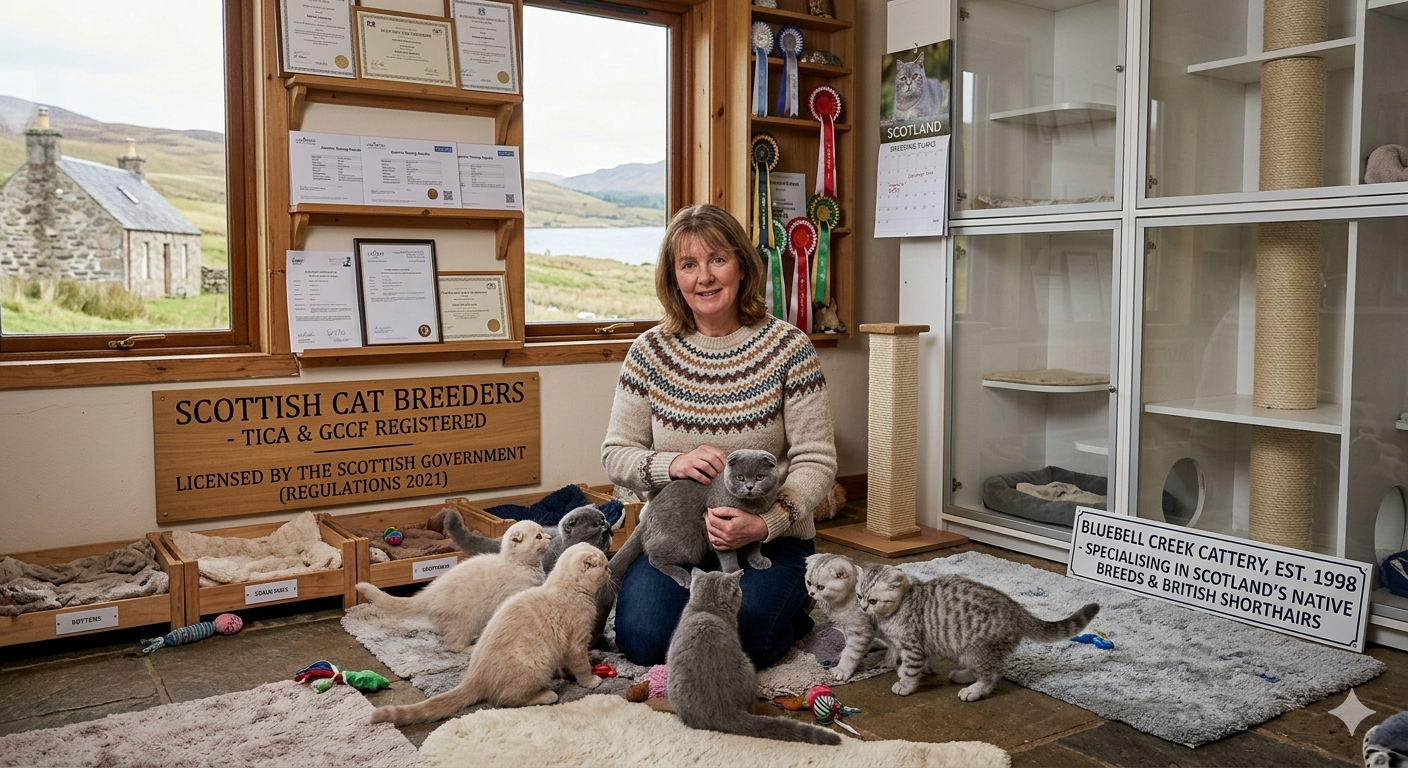
Bringing a kitten into your home is a decision that affects the next 12 to 18 years of your life, which is exactly why the breeder you choose matters just as much as the breed you pick. A good breeder in Scotland will be transparent, health-conscious, and easily verifiable. The surest way to find one is to look for registration, licensing where required, health documentation, and clear kitten care standards before any money changes hands.
Good cat breeders in Scotland aren’t found through a simple search and an adorable photo. They’re found through evidence — home conditions, paperwork provided before payment, proper licensing, and health testing that’s actually been carried out and documented. This guide explains exactly what to look for, the laws that apply to Scottish breeders, the most established breeds available, and the questions that separate a responsible breeder from a backyard operation.
Understanding Cat Breeder Licensing in Scotland
In Scotland, any person who breeds three or more litters of kittens within a one-year period is required to be licensed by their local authority. This licensing requirement exists specifically to ensure a baseline standard of care, housing, and welfare for breeding cats and their kittens, and local councils carry out inspections as part of this process.
This means that if a breeder you’re considering is producing multiple litters per year, you should expect to see evidence of local authority licensing. A breeder operating above this threshold without a license is operating outside the law, which is itself a significant red flag about how seriously they take regulatory and welfare standards more broadly.
Smaller hobby breeders producing only one or two litters occasionally may fall below the licensing threshold, but this doesn’t mean they should be held to a lower standard of health testing, registration, or transparency — it simply means the legal licensing requirement doesn’t apply to their specific volume of breeding.
GCCF and TICA Registration: What It Actually Means
Two main organizations oversee pedigree cat registration that’s relevant to breeders in Scotland and across the UK.
The Governing Council of the Cat Fancy, commonly known as the GCCF, registers around 20,000 pedigree cats each year and recognizes a wide range of breeds, each typically registered in multiple official colors and patterns. The GCCF operates a Breeder Scheme specifically designed to promote responsible breeding, requiring breeders who join to commit to producing healthy, sociable kittens that conform to their breed’s official standard and to comply with the GCCF’s code of ethics.
The International Cat Association, known as TICA, is the other major registry active among Scottish breeders, particularly common among breeders of Maine Coons, Bengals, and other breeds with strong international recognition through TICA specifically.
When a breeder describes themselves as “GCCF registered” or “TICA registered,” this should mean their cattery has an officially registered breeding prefix, their kittens are individually registered with a verifiable pedigree, and they’ve agreed to follow the relevant organization’s ethical breeding guidelines. A search tool on the GCCF website allows potential buyers to verify breeders against an official, searchable breeder map rather than relying solely on claims made in an online advert.
It’s worth noting that a directory listing alone is not an absolute guarantee of quality, but it provides a far stronger starting point than a social media post with no verifiable breeding history or welfare documentation behind it.
What a Responsible Breeder Should Provide
Reputable breeders across Scotland tend to follow a fairly consistent set of standards when kittens are ready to go to their new homes. At minimum, you should expect a kitten to be registered with the relevant pedigree organization, to come with a complete vaccination record covering core diseases such as cat flu and enteritis, typically administered at both 9 and 12 weeks of age, and to have been checked by a veterinarian on at least two separate occasions before leaving the breeder.
Microchipping has become a standard expectation as well, along with a period of starter insurance, often around five weeks, intended to give new owners coverage while they arrange their own ongoing policy. Most established breeders also provide a multi-generation pedigree document, typically tracing back five generations, along with a written care advice pack and a small kitten starter pack to ease the transition to a new home.
Beyond paperwork, the conditions kittens are raised in matter significantly to their long-term temperament. Kittens raised within the breeder’s family home, exposed to normal household noise, handled regularly by people, and socialized alongside their littermates tend to adjust far better to new homes — particularly homes with children or other pets — than kittens raised in isolated breeding facilities with minimal human contact.
Many responsible breeders will not release kittens until they are at least 12 to 13 weeks old, allowing sufficient time for full vaccination, weaning, and socialization with their mother and littermates before the transition to a new home.
Popular Cat Breeds Among Scottish Breeders
Scotland is home to breeders specializing in a wide range of pedigree breeds, several of which have particularly strong representation across the country.
Maine Coons are bred by numerous Scottish catteries, with breeders typically focusing on size, type, health, and temperament. Several Maine Coon breeders operate as licensed hobby breeders, inspected by their local council, and many are TICA registered specifically for this breed.
British Shorthairs have a strong breeding presence in Scotland as well, with some breeders holding notable show achievements within the GCCF system and specializing in specific coat colors and patterns within the breed standard.
Scottish Folds, with their distinctive folded ears, are bred by a number of catteries, typically marketed alongside complete veterinary history and early-age socialization documentation given the breed’s specific health considerations.
Bengals, known for their vibrant, exotic-looking coat patterns, are bred by several TICA-registered specialists across Scotland, with reputable breeders emphasizing both the breed’s distinctive appearance and overall health.
Siamese and Oriental breeds, along with related varieties such as Tiffanies and Asian Shorthairs, also have dedicated breeders in Scotland, including catteries actively involved in UK-wide show circuits under the GCCF.
Questions to Ask Before Choosing a Breeder
Before committing to a kitten, a responsible breeder will welcome direct questions and answer them honestly rather than becoming defensive or evasive. It’s worth asking specifically whether the breeder is registered with the GCCF or TICA, and whether they hold the appropriate local authority license if they produce three or more litters annually.
Ask what health testing has been carried out on the parent cats, particularly for breeds with known hereditary health conditions, and request to see documentation rather than simply taking a verbal assurance. Ask how kittens are raised day to day — whether they live within the family home, what kind of socialization and handling they receive, and at what age kittens are typically released to new homes.
It’s also reasonable to ask whether you can visit in person before committing, ideally meeting the kitten’s mother and seeing the environment kittens are raised in directly. Many established breeders actively welcome visitors, even from people who aren’t yet certain about a purchase, since meeting new people helps further socialize kittens into confident, friendly pets.
Finally, ask what ongoing support the breeder offers after you take your kitten home. Established breeders are often happy to answer questions for the life of the cat, which can be a valuable resource, particularly for first-time pedigree cat owners.
Red Flags to Watch For
Several warning signs consistently separate problematic breeders from responsible ones. Be cautious of any breeder unwilling to provide registration documentation, health testing records, or a clear pedigree before requesting payment, as well as breeders who pressure you to commit or pay a deposit before you’ve had the opportunity to ask questions or visit in person.
Be wary of kittens advertised as available significantly earlier than 12 to 13 weeks of age, since this often indicates kittens are being separated from their mother and littermates before adequate socialization and immune development. Multiple breeds or litters constantly available from the same seller, combined with vague or inconsistent answers about licensing, can also indicate a higher-volume operation prioritizing turnover over individual animal welfare.
If a breeder seems reluctant to let you see where kittens are actually raised, or insists on meeting only in neutral locations away from their home, this should be treated as a significant concern rather than a minor inconvenience.
FAQs About Cat Breeders in Scotland
Q1: Do cat breeders in Scotland need a license?
Yes, anyone breeding three or more litters of kittens within a one-year period in Scotland is required to be licensed by their local authority, which includes inspection of breeding conditions. Smaller hobby breeders below this threshold are not legally required to hold this specific license, though responsible breeding standards should still apply regardless of litter volume.
Q2: What’s the difference between GCCF and TICA registration?
The GCCF is the primary UK-based pedigree cat registry, registering around 20,000 cats annually and overseeing a Breeder Scheme focused on ethical breeding practices. TICA is an international registry particularly prominent among breeders of certain breeds such as Maine Coons and Bengals. Many breeders in Scotland are registered with one or both organizations depending on their breed and show involvement.
Q3: At what age should I be able to take my kitten home?
Most responsible breeders in Scotland release kittens at a minimum of 12 to 13 weeks of age, by which point kittens have typically completed their core vaccination schedule and had sufficient time to be properly socialized with their mother and littermates. Kittens offered significantly earlier than this should raise concern.
Q4: What paperwork should come with a pedigree kitten?
At minimum, expect a kitten to come with registration documentation from the relevant organization (GCCF or TICA), a full vaccination record, evidence of at least two veterinary health checks, microchipping confirmation, and typically a multi-generation pedigree along with a period of starter insurance.
Q5: How can I verify a breeder is genuinely registered?
The GCCF maintains a searchable breeder map and Breeder Scheme directory that allows potential buyers to verify breeders independently rather than relying solely on claims made in an online listing. Checking a breeder against this kind of official directory provides a far more reliable starting point than an unverified social media advert.
Q6: Are hobby breeders less reliable than larger catteries?
Not necessarily. Many of Scotland’s most reputable breeders describe themselves as small hobby breeders producing only occasional litters, often with cats living as genuine family pets within the home. Scale alone isn’t an indicator of quality; transparency, registration, health testing, and socialization standards matter far more than the size of the operation.
Q7: What questions should I ask before buying a kitten?
Key questions include whether the breeder is GCCF or TICA registered, whether they hold the appropriate local authority license if applicable, what health testing has been performed on the parents, how kittens are socialized day to day, and whether you can visit in person to meet the kitten and its mother before committing.
Q8: Why do health-tested pedigree kittens often cost more?
Health testing, official registration, and the veterinary care involved in responsible breeding all add genuine cost to producing each litter. Prices vary significantly depending on breed and breeder reputation, but the additional cost associated with proper documentation and testing is generally considered a worthwhile trade-off against the risk of preventable health issues later in the cat’s life.
More From Our Blog
If you found this article helpful, you might also enjoy exploring more content from our blog. We regularly publish guides, tips, and insights across a variety of topics to help you stay informed and make better decisions. Feel free to check out our other articles and let us know what you’d like us to write about next.