
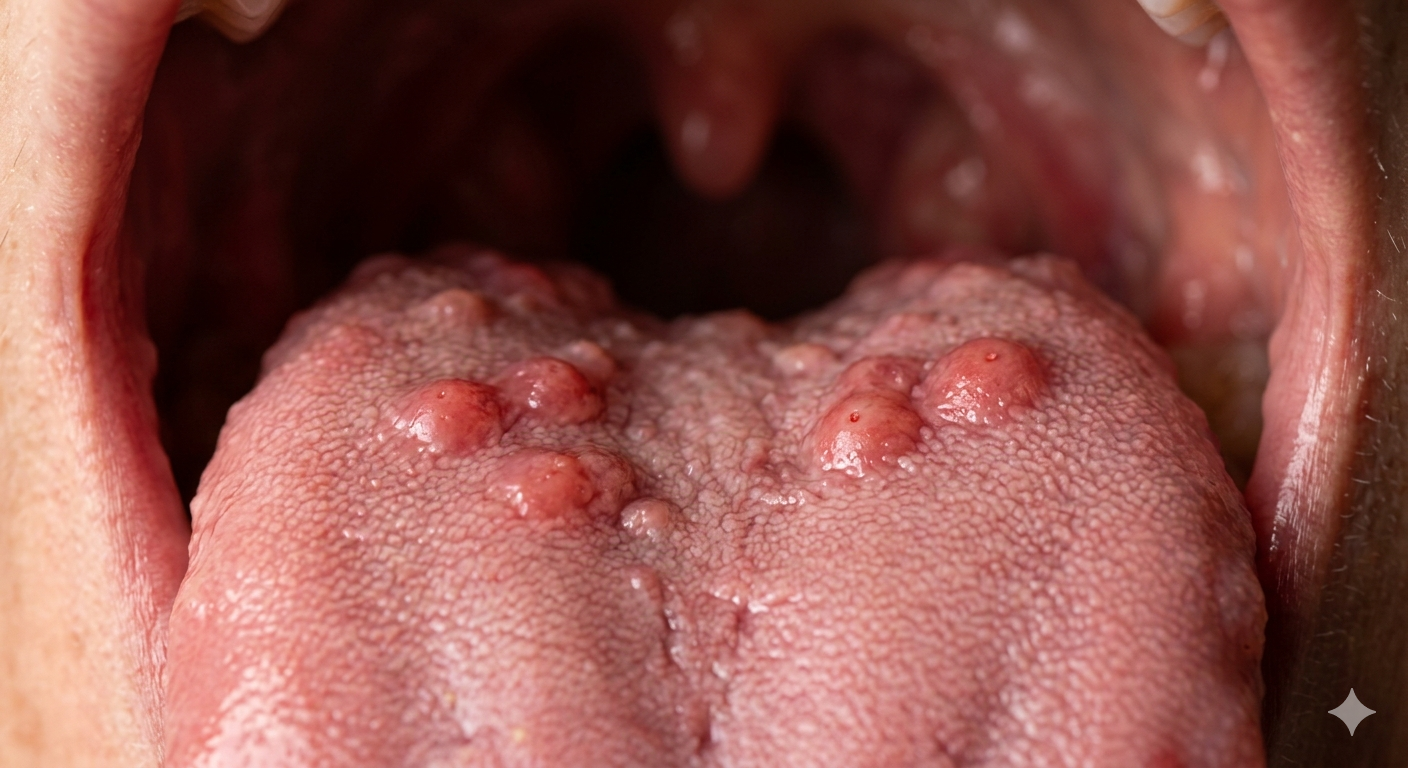
What Are “Pimples” on the Back of the Tongue?
Despite the name, what most people call a “pimple” on the tongue isn’t actually acne — your tongue doesn’t have pores or oil glands the way skin does. What you’re seeing or feeling is almost always related to your papillae, the small bumps that naturally cover the surface of your tongue and house your taste buds.
There are three main types of papillae located in different areas of the tongue, and the ones found toward the back are typically larger, which is one reason bumps in that area can feel more noticeable or alarming than bumps near the tip. In most cases, small, painless bumps on the back of the tongue are simply normal, slightly enlarged papillae and aren’t a cause for concern on their own.
The medical term most often used for the kind of painful, swollen bump people describe as a “tongue pimple” is transient lingual papillitis, sometimes nicknamed “lie bumps.” This happens when something irritates the papillae, causing them to swell into noticeable, sometimes painful red or white bumps.
Why Are They Called “Lie Bumps”?
The nickname “lie bumps” comes from an old superstition that these bumps only appear when someone has been lying — there’s no actual medical truth to that idea. In reality, transient lingual papillitis is simply a reaction to local irritation of the taste buds, completely unrelated to honesty.
Common Causes of Pimples on the Back of the Tongue
Irritation or Injury
Everyday physical irritation is one of the most frequent triggers. Accidentally biting your tongue, eating very hot or spicy food, or brushing too aggressively can all inflame the papillae and lead to swollen, painful bumps.
Acidic or Spicy Foods
Highly acidic foods, such as citrus fruits and tomatoes, along with spicy dishes, are commonly reported triggers. Cutting back on these foods while your tongue feels irritated can help prevent the bumps from worsening or recurring.
Allergies or Sensitivities
Reactions to certain foods, specific toothpaste ingredients, or mouthwash can also trigger irritation that shows up as small bumps on the tongue, particularly if the bumps appear alongside other symptoms like mild swelling or a tingling sensation.
Canker Sores
Canker sores are a different but related cause of tongue bumps, generally more painful than ordinary papillae irritation. They typically appear as small, round, white or yellow lesions surrounded by red, inflamed tissue, and can occur on the back of the tongue as well as other areas of the mouth.
Oral Thrush or Yeast Infection
White coatings or patches on the back of the tongue, rather than isolated red bumps, can sometimes indicate oral thrush, a yeast infection inside the mouth. This typically requires professional evaluation rather than home care alone.
Stress, Hormonal Changes, and Gut Health
Some experts point to gastrointestinal and hormonal factors as potential contributors to transient lingual papillitis, suggesting that excess sugar, dairy, or refined carbohydrates may play a role for some people. Reducing these trigger foods is sometimes recommended as part of a broader approach to reducing flare-ups, alongside avoiding direct irritants like spicy or acidic foods.
Viral or Bacterial Infections
In some cases, an underlying viral or bacterial infection can contribute to bumps or sores on the tongue. These cases are more likely to come with other symptoms, such as fever, swollen lymph nodes, or more widespread mouth discomfort, and may require antiviral or antibiotic treatment depending on the specific cause.
What Do Tongue Pimples Typically Look Like?
The appearance can vary depending on the underlying cause, which is part of why identifying the type of bump matters for figuring out the right approach.
Normal, harmless bumps are usually small, painless, and simply represent slightly enlarged papillae as part of the tongue’s natural texture. Irritation-related bumps from lie bumps tend to appear as small, raised red or white spots, often tender or mildly painful, especially when eating or drinking something acidic or hot. Canker sores look noticeably different, presenting as flatter, white or yellow lesions with a distinct red, inflamed border. White patches or coatings, rather than individual raised bumps, are more suggestive of a possible yeast infection and are generally treated differently than simple irritation bumps.
How Long Do Tongue Pimples Last?
In most cases, tongue pimples caused by simple irritation are short-lived, typically resolving within one to three days, though it can take up to a week if the area continues to be irritated by hot, spicy, or acidic foods during the healing process. Symptoms from transient lingual papillitis specifically are generally described as transient, often lasting only one to two days before disappearing on their own.
If bumps last longer than about two weeks, or if they worsen rather than improve, this moves outside the typical pattern for simple irritation and is a reasonable signal to get a professional opinion rather than continuing to wait it out.
How to Treat Pimples on the Back of the Tongue at Home
For most cases caused by simple irritation, home care is enough to manage symptoms while the bumps heal naturally.
Resist the urge to pop or pick at the bumps. Unlike a skin pimple caused by trapped oil in a pore, a tongue bump is part of the tongue’s own tissue structure, and attempting to pop it can introduce bacteria, increase irritation, and delay healing rather than speed it up.
Warm saltwater rinses are a commonly recommended home remedy, along with gentle tongue cleaning, to help reduce discomfort. Avoiding known trigger foods, particularly anything spicy, very hot, or highly acidic, while the area is inflamed can prevent further irritation and allow healing to progress more smoothly.
For mild pain, over-the-counter pain relievers such as acetaminophen or ibuprofen can help reduce discomfort and inflammation. Topical gels specifically designed for mouth sores may also provide localized relief, particularly for canker sores or more tender bumps.
Maintaining good general oral hygiene, including brushing twice daily with a soft toothbrush and fluoride toothpaste, flossing, and using an alcohol-free mouthwash, supports healing and can help reduce the frequency of flare-ups over time.
When to See a Doctor or Dentist
While the majority of tongue bumps are harmless and resolve on their own, certain patterns and symptoms warrant a professional evaluation rather than continued home care.
Schedule an appointment if bumps last longer than two weeks, become increasingly painful, or change noticeably in size, shape, or color. It’s also worth seeking care if the bumps spread, cause swelling, or come with a sore throat that isn’t improving on its own.
Additional warning signs that should prompt a sooner evaluation include difficulty swallowing, a persistent metallic taste, visible white patches that don’t wipe away easily, or symptoms accompanied by fever. While rare, persistent bumps that don’t follow the typical pattern of quick, irritation-related healing can occasionally indicate something more serious, including infections requiring prescription treatment or, in uncommon cases, conditions that need to be ruled out through further evaluation or biopsy.
If you have any bumps that concern you, are unusually persistent, or are accompanied by other symptoms affecting your overall health, contacting a doctor or dentist for a proper evaluation is always the safer choice over self-diagnosis.
How to Prevent Tongue Pimples From Coming Back
Since most cases stem from everyday irritation, prevention generally focuses on identifying and avoiding personal trigger factors rather than any single universal fix.
Being mindful while eating very hot food, taking care not to bite your tongue, and brushing with a gentle technique using a soft-bristled toothbrush can all reduce the everyday physical irritation that commonly leads to lie bumps. For those who notice a pattern connected to specific foods, gradually reducing spicy, highly acidic, or otherwise trigger foods can help minimize recurrence.
Maintaining consistent oral hygiene, managing stress through regular exercise or relaxation practices, and eating a balanced diet rich in vitamins are also commonly recommended general habits that support overall oral health and may reduce how often these bumps appear.
Avoiding harmful habits such as smoking and excessive alcohol consumption is also worth considering, since these can contribute to a range of oral health issues beyond just tongue irritation.
FAQs About Pimples on the Back of the Tongue
Q1: Is it safe to pop a pimple on my tongue?
No. Unlike a skin pimple, a tongue bump is part of the tongue’s own tissue and isn’t caused by trapped oil that can be safely released. Popping or picking at it can introduce bacteria, increase irritation, and delay healing rather than help it.
Q2: How long does a pimple on the tongue usually last?
Most heal within one to three days with basic care, though irritation-related bumps can take up to a week if the area continues to be exposed to spicy, hot, or acidic foods during healing.
Q3: Can a pimple on the back of my tongue be cancer?
Rarely. The vast majority of tongue bumps are caused by simple irritation, minor infections, or normal papillae and are not a sign of cancer. However, a bump that persists for more than two weeks, changes in appearance, or doesn’t follow the typical healing pattern should be evaluated by a doctor to rule out more serious causes.
Q4: What foods commonly trigger tongue pimples?
Spicy foods, acidic foods like tomatoes and citrus fruits, and very hot foods or drinks are among the most commonly reported triggers for irritation-related tongue bumps.
Q5: Why are bumps on the back of the tongue sometimes more noticeable than elsewhere?
The papillae located toward the back of the tongue tend to be larger than those near the tip, which can make swelling or irritation in that area feel more pronounced or uncomfortable.
Q6: What’s the difference between a tongue pimple and a canker sore?
Tongue pimples, or lie bumps, are typically small, raised, red or white spots resulting from irritated papillae. Canker sores look different, appearing as flatter, white or yellow lesions with a distinct red, inflamed border, and are generally considered more consistently painful than ordinary papillae irritation.
Q7: Could white patches on the back of my tongue mean something different than a typical lie bump?
Yes. White coatings or patches, rather than individual raised red or white bumps, can be a sign of oral thrush, a yeast infection in the mouth, which typically requires professional evaluation and treatment rather than home care alone.
Q8: When should I see a dentist or doctor about tongue bumps?
See a professional if bumps last longer than two weeks, become increasingly painful or swollen, spread to other areas, or come with symptoms like fever, difficulty swallowing, a persistent metallic taste, or visible white patches that don’t resolve on their own.
More From Our Blog
If you found this article helpful, you might also enjoy exploring more content from our blog. We regularly publish guides, tips, and insights across a variety of topics to help you stay informed and make better decisions. Feel free to check out our other articles and let us know what you’d like us to write about next.