
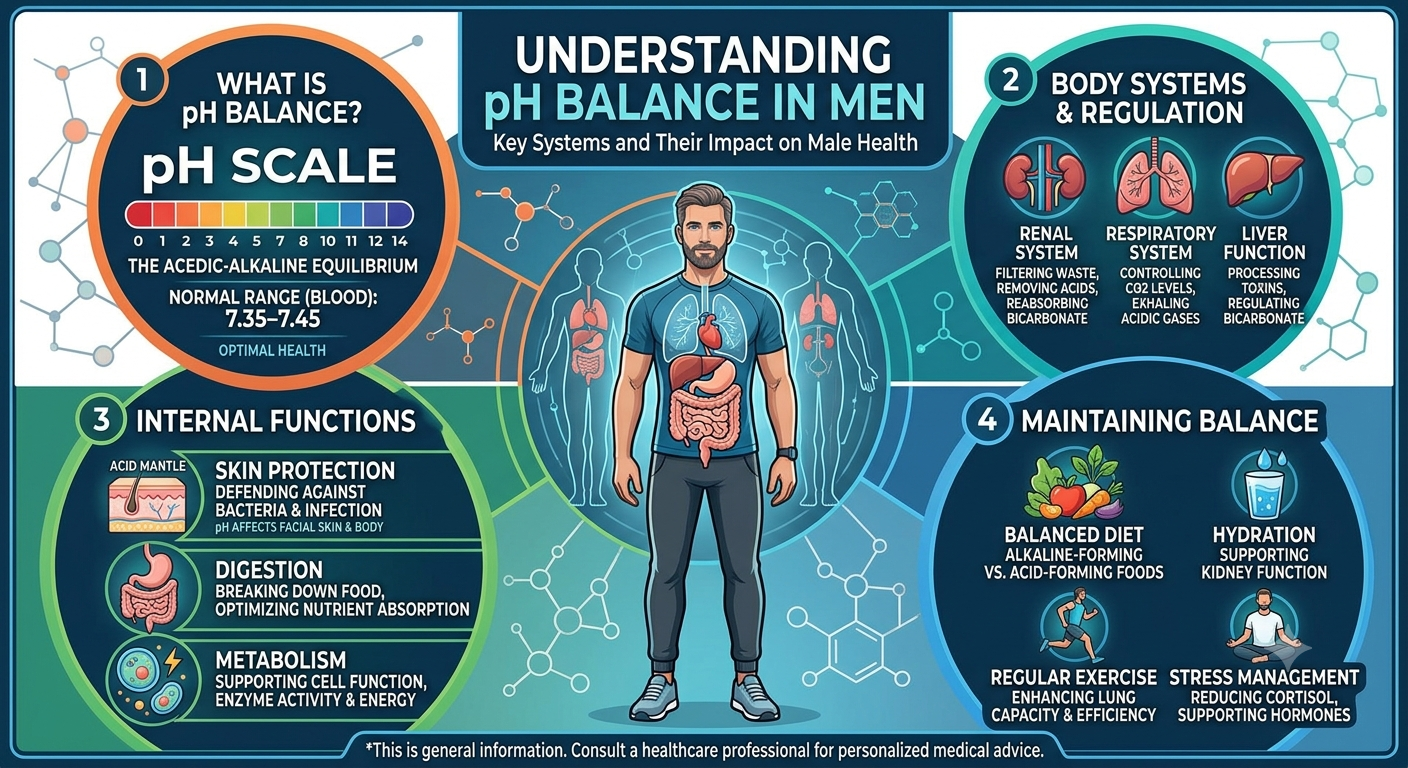
Do Men Have a pH Balance?
Yes, men absolutely have a pH balance — and it is just as important for their health as the pH balance discussions more commonly associated with women’s health. While conversations about pH balance in health and wellness tend to focus heavily on women, the reality is that every human body, regardless of sex, relies on tightly regulated pH levels to function properly.
The common misconception that pH balance is exclusively a women’s health topic comes from the frequent discussions around vaginal pH, which plays a specific role in preventing infections. But this focus has caused men’s pH health to be significantly underrepresented in mainstream wellness conversations, despite being equally fundamental to how the male body functions at a cellular, organ, and system-wide level.
Understanding your pH balance as a man — what it is, where it matters, what disrupts it, and how to support it — is a genuinely useful piece of health knowledge that most men simply haven’t been given.
What Is pH and How Is It Measured?
The term pH stands for “potential of hydrogen” and measures how acidic or alkaline a substance is on a scale from 0 to 14. A pH of exactly 7 is neutral. Values below 7 are acidic, and values above 7 are alkaline. The lower the number, the more acidic the substance; the higher the number, the more alkaline.
The human body functions best when blood pH remains within a very specific range of 7.35 to 7.45 — slightly alkaline. This narrow window is not arbitrary. Enzymes, proteins, and the biochemical reactions that power everything from energy production to immune function are exquisitely sensitive to pH. Even small deviations from this range can meaningfully affect how well these processes work.
Importantly, different parts of the body have very different pH levels depending on their specific function. This is completely normal and by design — the stomach needs to be highly acidic to digest food, while the blood needs to be slightly alkaline to transport oxygen efficiently. Understanding this variation across body systems is key to understanding pH balance in a meaningful way rather than as a vague wellness concept.
Men’s pH Levels Across Different Body Systems
Blood pH: The Most Critical Balance
Blood pH is the most tightly regulated pH in the entire body, and for good reason — deviations of even 0.1 pH units outside the normal range of 7.35 to 7.45 can cause serious physiological problems. The body uses three interconnected systems to maintain blood pH within this narrow band: the lungs, the kidneys, and a chemical buffering system within the blood itself.
When blood becomes too acidic — a condition called acidosis — it can impair enzyme function, interfere with oxygen delivery, and affect heart rhythm. When it becomes too alkaline — alkalosis — muscle function, nerve signaling, and calcium regulation are affected. The body works continuously and automatically to prevent either extreme, which is why blood pH stays remarkably stable under normal circumstances.
Skin pH: Men’s Protective Acid Mantle
Men’s skin has a naturally slightly acidic pH, typically falling between 4.5 and 5.5. This acidity is not a flaw — it is a deliberate protective mechanism known as the acid mantle, a thin film on the skin’s surface that forms a natural barrier against harmful bacteria, fungi, and environmental pollutants.
Men’s skin actually tends to be slightly more acidic than women’s skin on average, partly due to the influence of testosterone, which increases sebum production. Sebum — the skin’s natural oil — contributes to the acidic environment of the skin surface. This difference in skin pH is one of the reasons men’s and women’s skin responds differently to certain skincare products.
When the skin’s acid mantle is disrupted — by harsh soaps, incorrect skincare products, or environmental exposure — the protective barrier weakens. This can lead to dryness, increased sensitivity, breakouts, or greater susceptibility to skin infections. Using pH-balanced skincare products appropriate for men’s skin helps maintain this protective layer.
Stomach pH: Essential for Digestion
The stomach is intentionally one of the most acidic environments in the body, with a pH typically ranging from 1.5 to 3.5 when actively digesting food. This high acidity serves two critical purposes: it activates the digestive enzymes needed to break down proteins, and it kills most harmful bacteria and pathogens that enter through food and drink.
When stomach pH is disrupted — becoming too acidic or insufficiently acidic — digestive problems follow. Too much acid contributes to heartburn, acid reflux, and over time can cause damage to the esophageal lining. Too little acid, a condition called hypochlorhydria, impairs protein digestion, reduces absorption of key minerals including iron and B12, and can actually increase the risk of gastrointestinal infections since the natural bacterial kill mechanism is weakened.
Urine pH: A Window Into Overall Balance
Urine pH is one of the most accessible ways to get a rough indication of how the body is managing its overall acid-alkaline balance. Normal urine pH ranges from about 4.5 to 8.0, with the kidneys actively adjusting urine acidity to help maintain blood pH stability. When the body has excess acid to excrete, urine becomes more acidic. When it needs to excrete more alkaline material, urine pH rises.
Urine pH naturally fluctuates throughout the day and is significantly influenced by diet. A diet high in animal protein, processed foods, and sugar tends to produce more acidic urine, while a diet rich in fruits and vegetables tends to produce more alkaline urine. Hydration also affects urine pH, with dehydration generally concentrating and acidifying the urine.
Urine pH testing strips, available at pharmacies, can provide a basic daily snapshot but should not be used as a diagnostic tool. Significant or persistent abnormalities in urine pH should be evaluated by a doctor.
Saliva pH: Connection to Oral Health
Normal saliva pH averages around 7.0 but can range from approximately 6.2 to 7.6 throughout the day. Saliva plays an active role in oral pH regulation — it contains buffering agents that help neutralize acids produced by oral bacteria after eating. A balanced saliva pH is protective against tooth decay, plaque buildup, and gum disease.
Diet significantly influences saliva pH. Frequent consumption of acidic foods and drinks — carbonated sodas, citrus, sports drinks — can shift saliva pH toward acidity, reducing its protective capacity and increasing the risk of enamel erosion over time.
Reproductive pH: Why It Matters for Male Fertility
Semen pH is a specific and clinically relevant aspect of men’s pH balance, particularly in the context of fertility. Normal semen pH ranges from approximately 7.2 to 8.0. This slightly alkaline environment serves an important purpose — it helps protect sperm from the acidic environment of the vaginal canal, which would otherwise reduce sperm motility and viability.
Abnormal semen pH — either too acidic or too alkaline — can affect sperm function and is sometimes evaluated as part of a male fertility assessment. Consistently abnormal semen pH may indicate underlying issues with the reproductive glands, including the prostate or seminal vesicles, and warrants evaluation by a urologist or fertility specialist if conception is a concern.
Signs That Men’s pH Balance May Be Off
Because pH is regulated automatically by the body’s systems, dramatic shifts in overall pH are typically the result of underlying medical conditions rather than everyday lifestyle factors. However, certain symptoms can suggest that various aspects of pH balance are not optimal.
Persistent fatigue and low energy can reflect imbalances in metabolic pH regulation. Frequent digestive issues including bloating, heartburn, indigestion, or irregular bowel habits may point to disrupted stomach or intestinal pH. Skin concerns including increased dryness, persistent breakouts, or unusual sensitivity can reflect disruption of the skin’s acid mantle. Muscle weakness or cramps, particularly after exercise, can sometimes relate to the body’s management of metabolic acid produced during physical exertion.
It is important to note that these symptoms are nonspecific and can have many possible causes. Attributing them solely to “pH imbalance” without professional evaluation is not medically sound. If symptoms are persistent or significant, consulting a healthcare provider rather than self-diagnosing based on pH is always the appropriate step.
What Disrupts Men’s pH Balance?
Several lifestyle and dietary factors can challenge the body’s pH regulatory systems, even though the body generally manages to maintain balance despite these inputs.
Diet is the most commonly discussed factor. A diet heavily weighted toward animal protein, processed foods, refined sugar, and alcohol tends to generate more metabolic acid, placing greater demand on the kidneys and lungs to maintain blood pH. A diet with more fruits, vegetables, and whole foods provides minerals like potassium and magnesium that support the body’s buffering systems.
Dehydration reduces the kidneys’ ability to excrete acid efficiently and can affect urine and saliva pH. Staying well hydrated is one of the simplest supports for healthy pH regulation.
Intense exercise produces lactic acid and carbon dioxide as metabolic byproducts, temporarily challenging blood pH. This is a normal physiological response that the body handles well in healthy individuals — rest and breathing bring levels back to normal quickly.
Chronic stress triggers hormonal responses that can indirectly affect pH regulation over time. Stress management through regular physical activity, sleep, and relaxation practices supports overall metabolic balance.
Certain medications, including some diuretics, antacids, and other drugs, can affect the body’s acid-base balance and should be considered if pH-related symptoms arise in the context of medication use.
How Men Can Support Healthy pH Balance
Supporting pH balance doesn’t require extreme dietary protocols or expensive supplements. A few consistent, evidence-based habits meaningfully support the body’s natural regulatory systems.
Eating a diet rich in vegetables, fruits, legumes, and whole grains provides the minerals and alkalizing compounds that support the body’s buffering systems without placing excessive acid-generating demand on the kidneys and lungs. This doesn’t mean eliminating protein — it means balancing animal protein intake with substantial plant food intake.
Staying well hydrated throughout the day supports kidney function, which is one of the primary mechanisms for maintaining blood pH balance. Avoiding excessive alcohol and sugary beverages also reduces the acid load the body has to manage.
Using pH-appropriate skincare products specifically formulated for men helps maintain the skin’s natural acid mantle without disrupting it with products that are too alkaline or too stripping.
Regular physical activity supports metabolic efficiency and the body’s overall regulatory capacity, even though exercise temporarily generates metabolic acid. The long-term adaptation to regular exercise actually improves the body’s buffering ability.
Managing stress through adequate sleep, regular movement, and deliberate relaxation reduces the indirect hormonal effects that can challenge pH regulation over time.
When to See a Doctor
The body’s pH regulatory systems are highly effective under normal circumstances, and most men will never experience a clinically significant pH imbalance without an underlying medical cause. However, certain situations warrant medical evaluation.
Persistent, unexplained fatigue, digestive problems that don’t respond to dietary changes, or significant muscle weakness or cramping should be investigated by a doctor rather than attributed to pH without proper testing. Conditions including kidney disease, diabetes, chronic lung disease, and others can genuinely affect the body’s ability to regulate pH — and these require medical management rather than lifestyle adjustments alone.
If fertility is a concern and conception has been challenging, a semen analysis that includes pH measurement is a standard part of the initial male fertility evaluation and is worth requesting through a urologist or reproductive medicine specialist.
FAQs About Men’s pH Balance
Q1: Do men really have a pH balance?
Yes. Every human body, male or female, maintains pH balance across multiple systems including blood, skin, stomach, urine, saliva, and reproductive fluids. pH balance is not gender-specific — it is a fundamental aspect of how all human bodies function at a biological level.
Q2: What is the ideal pH for men’s blood?
The ideal blood pH for men is between 7.35 and 7.45, which is slightly alkaline. This range is identical for all humans regardless of sex, since the biochemical processes that blood pH supports operate the same way in all human bodies.
Q3: What is the normal pH of men’s skin?
Men’s skin naturally has a slightly acidic pH of approximately 4.5 to 5.5. This acidic environment forms a protective acid mantle that defends against bacteria, fungi, and environmental irritants. Men’s skin tends to be slightly more acidic than women’s skin, partly due to the influence of testosterone on sebum production.
Q4: Can diet affect men’s pH balance?
Diet influences the acid load that the body’s regulatory systems must manage. A diet heavy in processed foods, animal protein, sugar, and alcohol generates more metabolic acid. A diet rich in fruits, vegetables, and whole foods supports the body’s buffering systems. However, the body’s regulatory systems generally maintain blood pH within the normal range regardless of diet in healthy individuals — dietary pH effects are most noticeable in urine and saliva rather than blood.
Q5: What are signs that a man’s pH balance may be disrupted?
Possible signs include persistent fatigue, frequent digestive issues such as heartburn or bloating, skin dryness or unusual breakouts, and muscle weakness or cramping. These symptoms are nonspecific and can have many causes — significant or persistent symptoms should be evaluated by a healthcare professional rather than self-treated as a pH issue.
Q6: Does men’s pH balance affect fertility?
Yes. Normal semen pH ranges from approximately 7.2 to 8.0, and this slightly alkaline environment protects sperm from the acidic vaginal environment. Abnormal semen pH — either too acidic or too alkaline — can affect sperm motility and function and may be evaluated as part of a male fertility assessment.
Q7: Can stress affect men’s pH balance?
Chronic stress can indirectly affect pH regulation through its hormonal effects on metabolism and kidney function. While acute stress produces only minimal temporary pH changes, prolonged stress is one of several lifestyle factors that can cumulatively challenge the body’s regulatory systems over time.
Q8: Is it possible to test pH balance at home?
Urine pH test strips are available at pharmacies and provide a basic daily snapshot of urinary pH, which reflects how the kidneys are managing acid excretion at that moment. However, urine pH fluctuates significantly throughout the day and is strongly influenced by recent food and fluid intake. Home urine pH testing should not be used as a diagnostic tool for overall health — it is most useful as a general awareness tool, and any significant or consistent findings should be discussed with a doctor.
More From Our Blog
If you found this article helpful, you might also enjoy exploring more content from our blog. We regularly publish guides, tips, and insights across a variety of topics to help you stay informed and make better decisions. Feel free to check out our other articles and let us know what you’d like us to write about next.