
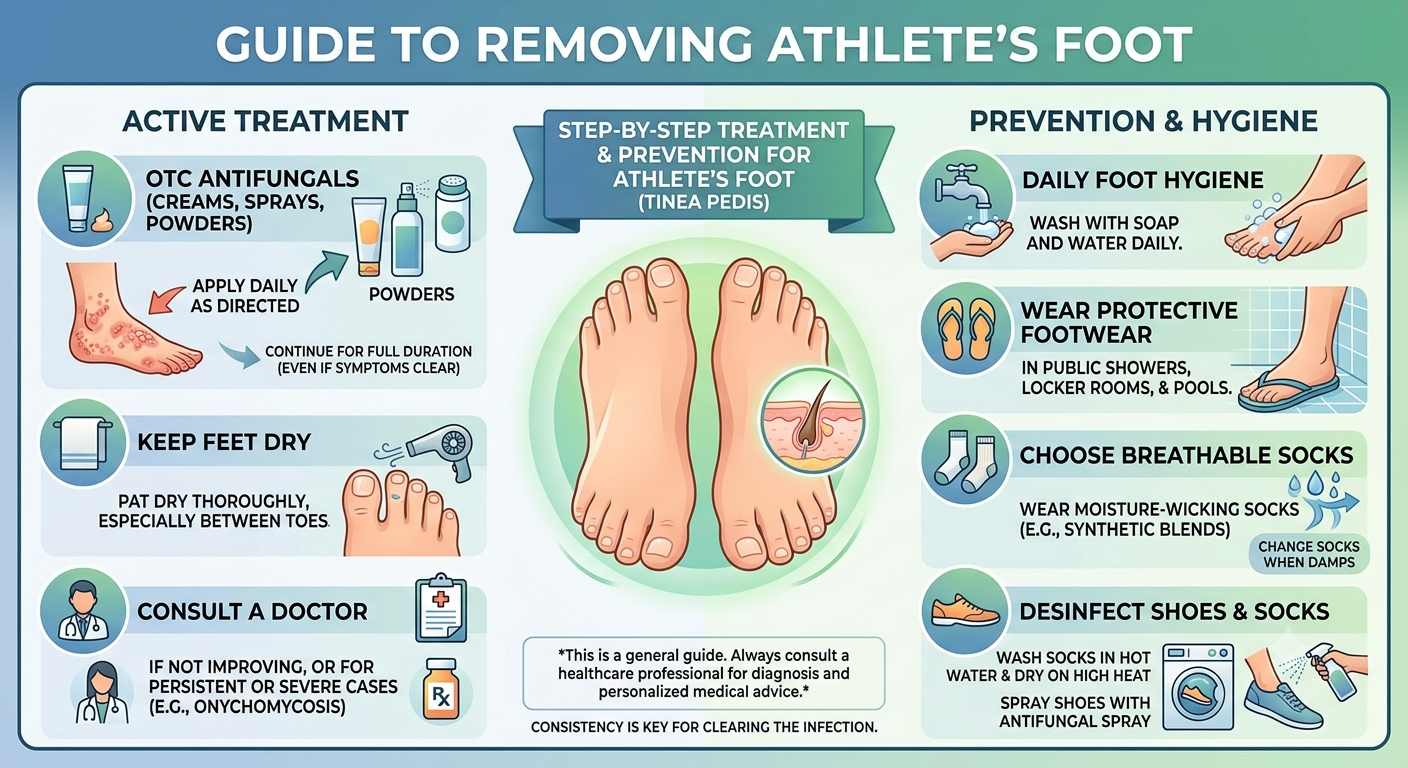
What Is Athlete’s Foot and Why Won’t It Go Away on Its Own?
Athlete’s foot, medically known as tinea pedis, is a contagious fungal infection affecting the skin of the feet, most commonly starting between the toes. Despite the name, it has nothing to do with being athletic — anyone can develop it. The culprit is a group of dermatophyte fungi that feed on keratin, the protein found in the outer layer of human skin, and thrive in warm, damp environments.
Without active treatment, athlete’s foot rarely clears on its own. The fungus is too well adapted to the environment shoes and socks provide — enclosed, warm, often moist from sweat — and left untreated it can spread to the toenails, hands, and groin, making early and consistent treatment essential.
Recognizing Athlete’s Foot: Symptoms to Watch For
The most common symptom is an itchy, stinging, burning rash between the toes, particularly between the fourth and fifth toes. The skin turns red, scaly, and may crack, peel, or blister. An unpleasant odor is another frequent sign, caused by a combination of fungal activity and secondary bacteria.
Athlete’s foot presents in several forms. The interdigital type affects the skin between the toes. Moccasin-type athlete’s foot covers the entire sole and sides of the foot with dry, thickened, scaly skin. Vesicular athlete’s foot produces fluid-filled blisters on the sole or between the toes. Identifying which type you have helps determine the most effective treatment approach.
Treatment 1: Over-the-Counter Antifungal Products
For most people, OTC antifungal products are the first and most effective step. They are available as creams, lotions, sprays, foams, and powders — all capable of killing or significantly slowing the fungus causing the infection.
The active ingredient matters most when choosing a product.
Terbinafine, found in products like Lamisil, belongs to the allylamine class and is the most effective OTC option available. Clinical data shows terbinafine clears athlete’s foot in around 73 out of 100 people who use it consistently, compared to only 17 out of 100 who see improvement without treatment. It often works within one week of application, though full treatment should continue as directed.
Clotrimazole and miconazole, found in products like Lotrimin and Micatin, belong to the azole class and work by disrupting the fungal cell membrane. They are effective and well-tolerated, typically requiring two to four weeks of daily use.
Tolnaftate, found in Tinactin, slows fungal growth rather than killing the fungus directly and works well for mild to moderate infections when applied consistently throughout the recommended treatment period.
Always apply antifungal products to completely clean and thoroughly dry feet. Moisture prevents proper absorption and helps the fungus survive. Continue treatment for at least one full week after symptoms appear to resolve, since fungal spores can persist on the skin even when it looks and feels normal — stopping too early is the most common reason athlete’s foot returns.
Creams work best on dry, scaly, larger affected areas. Sprays and powders are particularly useful between the toes where creams are harder to apply, and powders help absorb moisture throughout the day.
Treatment 2: Address Your Shoes and Socks
Treating the infection on your skin while ignoring your footwear creates a reinfection cycle that makes athlete’s foot almost impossible to fully eliminate. Shoes and socks can harbor live fungal spores for extended periods.
Spray the inside of your shoes with an antifungal spray after each use and allow them to dry completely before wearing again. Rotating between at least two pairs of shoes gives each pair time to dry out fully between wears. Antifungal powder sprinkled inside shoes daily helps absorb moisture and creates an environment less favorable to fungal growth.
Wash socks and any towels used on your feet at 60 degrees Celsius or 140 degrees Fahrenheit or higher. Fungal spores survive lower wash temperatures and can reinfect your feet immediately when you put those socks back on. Use a separate dedicated towel for your feet and avoid sharing towels with other household members.
Treatment 3: Keep Feet Clean and Dry Every Day
Removing moisture consistently is one of the most effective strategies for both treating active infections and preventing new ones. Fungi cannot grow without it.
Wash your feet thoroughly with soap and water at least once daily, paying close attention to the spaces between each toe. After bathing or showering, dry your feet completely before putting on socks or shoes — including carefully between every toe. Residual moisture in these spaces sustains the infection far more than most people realize.
Moisture-wicking socks made from synthetic performance fabrics or merino wool are significantly better than cotton, which absorbs sweat and holds it against the skin. Change socks at least once daily, more often if your feet perspire heavily.
Going barefoot or wearing open sandals when practical at home allows air circulation and reduces the warm, enclosed conditions the fungus needs to thrive.
Home Remedies: What Helps and What Doesn’t
Several home remedies can reduce symptoms and complement antifungal treatment. They should not replace OTC antifungal medication in most cases, but they do offer genuine supportive benefits.
Tea tree oil has documented antifungal and antibacterial properties. Apply it to the affected area once or twice daily, diluting it in a carrier oil for sensitive skin. It works best as an adjunct to OTC treatment rather than as a standalone approach.
Hydrogen peroxide poured directly onto the affected area twice daily kills surface fungus and bacteria. It will bubble on contact — this is normal. Allow it to dry completely before applying antifungal cream afterward.
Apple cider vinegar foot soaks involve mixing one part apple cider vinegar with two parts warm water and soaking feet for 20 minutes daily. The acidity creates conditions less favorable for fungal growth and provides symptomatic relief from itching and burning, but it is not strong enough alone to eliminate an established infection.
Antifungal powder, talcum powder, or cornstarch applied to dry feet before putting on socks absorbs moisture throughout the day and makes the environment less hospitable to fungal growth — a genuinely useful daily habit.
Sea salt foot soaks using a cup of sea salt dissolved in warm water and soaking for 20 minutes have mild antibacterial and antifungal properties and help draw moisture from the skin.
Treatment 4: Prescription Options for Stubborn Infections
If athlete’s foot has not improved after two to four weeks of consistent OTC antifungal treatment, see a doctor or dermatologist. More persistent or severe infections require prescription-strength options.
Prescription topical antifungals including ciclopirox, econazole, and prescription-strength clotrimazole are more potent than OTC formulations and are applied the same way but with greater effectiveness against resistant infections.
Oral antifungal tablets — specifically terbinafine and itraconazole — are prescribed for severe cases, infections that have spread to the toenails, or cases that haven’t responded to topical treatments. Oral terbinafine is highly effective even against stubborn infections, though it requires a course of several weeks.
Both oral medications carry a small risk of side effects. Terbinafine can cause gastrointestinal symptoms and temporary changes in taste and smell. Itraconazole may cause headaches, dizziness, and digestive issues. Both carry a very small risk of liver toxicity, so liver health is assessed before prescribing and both can interact with other medications — always disclose everything you are taking before starting oral antifungals.
Why Athlete’s Foot Keeps Coming Back
Recurrent athlete’s foot is extremely common and almost always has identifiable, fixable causes.
Stopping antifungal treatment too early — before fungal spores are fully eliminated even though symptoms have cleared — is the single most common reason. Finishing the full recommended course is non-negotiable for a lasting cure.
Continuing to wear contaminated footwear without disinfecting shoes and washing socks at high temperatures means the infection is immediately re-acquired from your own footwear. Treating the feet without addressing shoes is one of the main reasons treatment appears to fail.
For some people, frequently recurring athlete’s foot points to an underlying factor worth investigating — including poor circulation, diabetes, eczema, or immune system compromise — all of which increase susceptibility and make clearance more difficult. A podiatrist or dermatologist can assess whether an underlying condition is contributing.
Where Athlete’s Foot Can Spread If Untreated
Toenail fungus, also called onychomycosis, is the most common complication of untreated athlete’s foot. The fungus travels from the skin to the nail, causing the nail to thicken, discolor, and become brittle. Nail infections are significantly harder to treat than skin infections and often require months of oral antifungal medication to fully resolve.
The fungus can spread to the hands through scratching infected areas or drying hands and feet with the same towel. Jock itch — tinea cruris — is the same family of fungus affecting the groin, typically transferred when a towel used on infected feet is then used on the groin area. Drying your feet before the rest of your body after bathing, and using separate towels, prevents this.
Preventing Athlete’s Foot From Returning
Always wear flip-flops or waterproof sandals on pool decks, in gym showers, and in public locker rooms — these surfaces are among the most common transmission sources. Avoid walking barefoot in communal wet areas entirely.
Keep feet clean and dry daily, dry thoroughly between every toe after bathing, rotate footwear, wear moisture-wicking socks, and use antifungal foot powder preventively if you have naturally sweaty feet or regularly use shared facilities.
Never share towels, socks, or shoes. Regularly disinfect shower and bathroom floors, particularly in households where someone has had a recent infection.
When to See a Doctor
See a doctor if OTC treatment hasn’t produced clear improvement after two to four weeks, if the infection has spread to the toenails, if you develop signs of secondary bacterial infection such as significant swelling, warmth, pus, or fever, if the infection is spreading to other parts of your body, or if you have diabetes or a compromised immune system and develop athlete’s foot, since these conditions increase the risk of serious complications.
FAQs About Getting Rid of Athlete’s Foot
Q1: How long does it take to get rid of athlete’s foot?
Mild to moderate cases typically clear within one to two weeks with consistent OTC antifungal treatment. More severe or longstanding infections can take longer, and toenail involvement may require several months of oral antifungal treatment. Continuing treatment for at least one week after symptoms resolve is important to prevent regrowth from surviving spores.
Q2: What is the fastest way to get rid of athlete’s foot?
Terbinafine-based OTC creams such as Lamisil are the fastest-acting option, with studies showing significant clearing in as little as one week of consistent use. Apply to clean, completely dry feet as directed and simultaneously address shoe hygiene for the fastest and most lasting results.
Q3: Can athlete’s foot go away on its own without treatment?
Rarely. Without treatment, athlete’s foot tends to persist, worsen, and spread. Only around 17 in 100 people see spontaneous resolution — the large majority need active treatment to fully clear the infection.
Q4: Should I pop the blisters from athlete’s foot?
No. Popping blisters introduces bacteria, increases the risk of secondary infection, and spreads the fungus to adjacent skin. Leave blisters intact and continue antifungal treatment. If blisters are large, rapidly multiplying, or particularly painful, see a doctor for evaluation.
Q5: Can athlete’s foot spread to other parts of my body?
Yes. The same fungus can spread to the toenails, hands, and groin through scratching, shared towels, or contaminated surfaces. Avoiding scratching infected areas, using a dedicated towel for your feet, and drying your feet before the rest of your body after bathing are the most effective ways to contain and prevent spread.
Q6: What kills athlete’s foot fungus in shoes?
Antifungal sprays applied to the inside of shoes after each wear are the most effective method. Allow shoes to dry fully before wearing again, rotate between pairs, and use UV shoe sanitizers for additional protection. Replacing insoles periodically also removes a reservoir of fungal spores that sprays may not fully penetrate.
Q7: Is athlete’s foot contagious to other people?
Yes. Athlete’s foot spreads easily through direct contact with infected skin and through contaminated surfaces including floors, towels, and shoes. Wearing protective footwear in communal wet areas and not sharing personal items are the most effective ways to avoid spreading it to others.
Q8: When should I see a doctor for athlete’s foot?
See a doctor if OTC treatment produces no improvement after two to four weeks, if you have diabetes or a weakened immune system, if you see signs of secondary bacterial infection such as swelling, pus, warmth, or fever, if the infection has reached your toenails, or if it keeps returning repeatedly despite completing full courses of treatment.
More From Our Blog
If you found this article helpful, you might also enjoy exploring more content from our blog. We regularly publish guides, tips, and insights across a variety of topics to help you stay informed and make better decisions. Feel free to check out our other articles and let us know what you’d like us to write about next.